1. Imagine
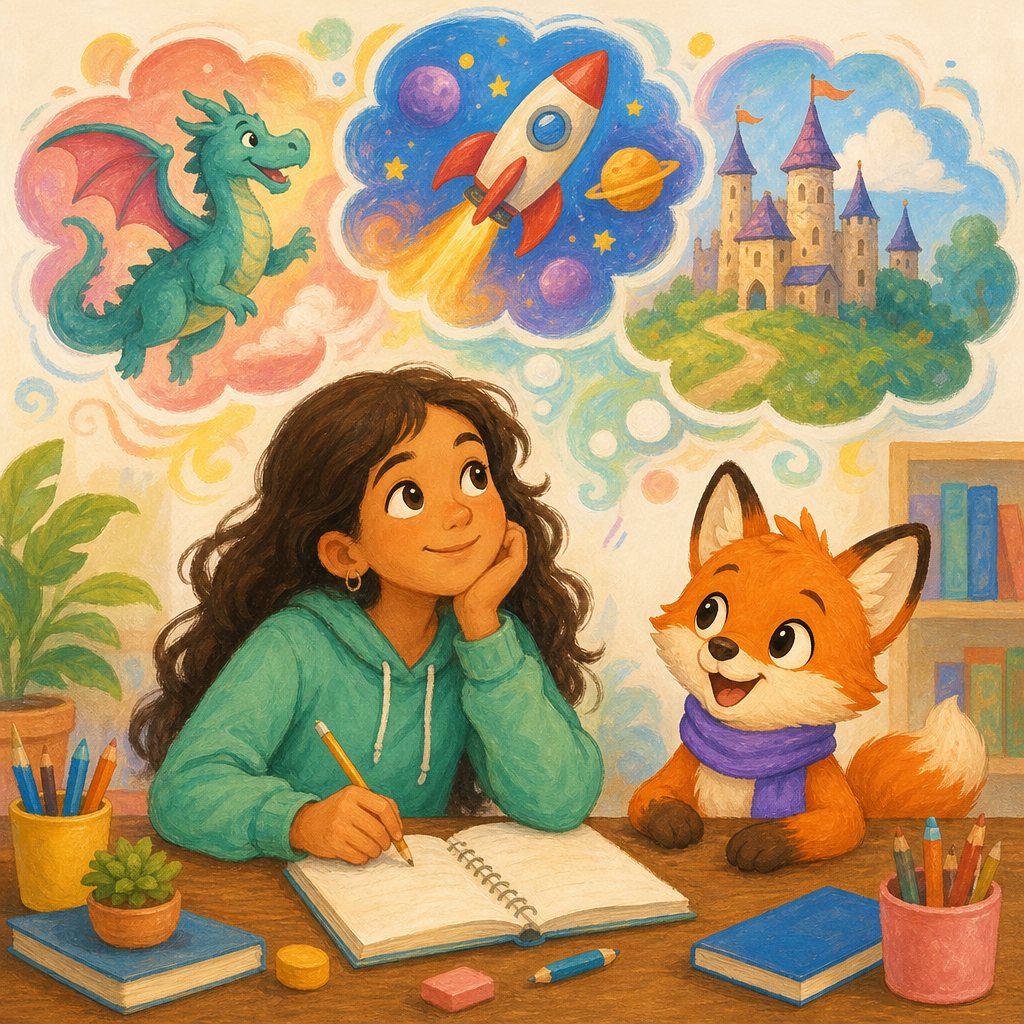
Dream up a hero, a world and a goal.
Four sessions. Each one unlocks a level. Each child ends with a real game and a link to share.
The loop every session follows.
Dream up a hero, a world and a goal.
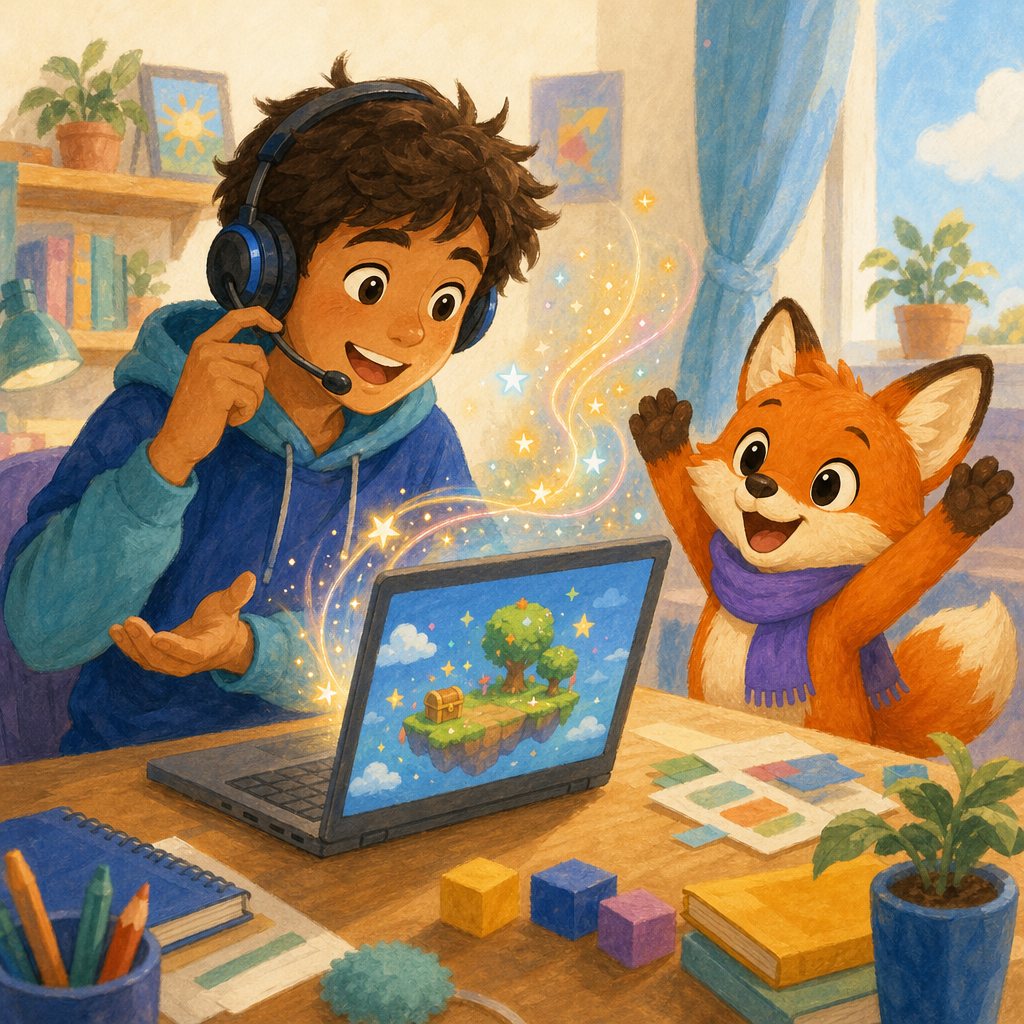
Say what you want. Be specific. Learn why that matters.
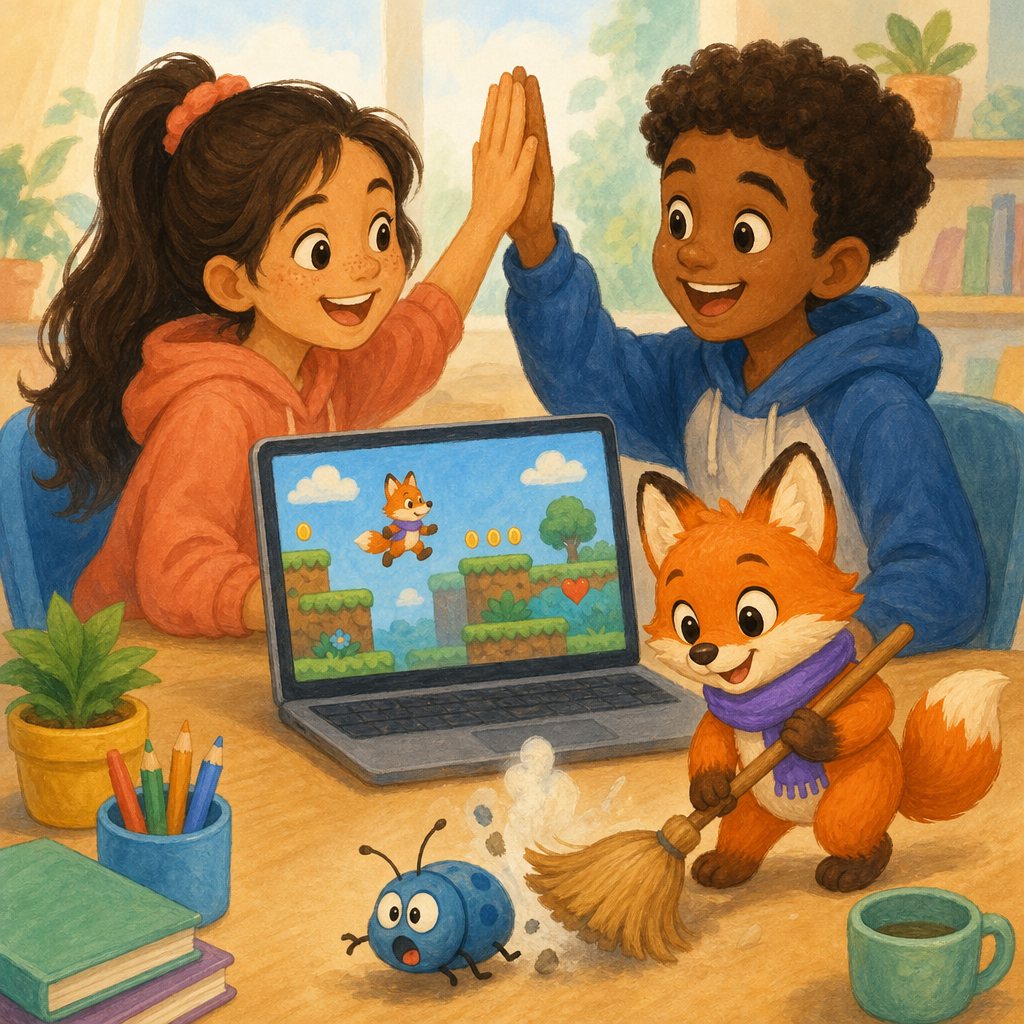
Play it, spot what's wrong, fix it, launch it.
Kids describe what they want in their own words, by talking or typing, whichever feels natural. The AI builds it, the child plays it, and then comes the important part: noticing what is not right and saying how to fix it.
Each session has one big idea, one thing to build, and one badge.
AI does what you say, not what you mean.
Kids compare a vague request with a specific one, meet the guided workspace, and catch the AI getting something wrong. They make their first hero and a tiny playable game, then sketch a game on a Game Card to bring back.
A game is rules plus look plus feel, and you can change each by asking.
Each child builds version 1 of their own game: type, world, hero, mission. Quick changes to speed, score, look and sound. A five-minute peek under the hood shows the game is just a file the AI wrote.
The best games come from testing, fixing and balancing.
Kids learn a three-step recipe: say what you saw, say what you wanted, ask for one fix. They improve their game with a new level, an enemy, a power-up or a win screen, and learn to undo a change that made things worse.
Finishing and sharing are part of making.
Polish the game, pass a quick quality check, and publish with parent approval. Families join, play the games and cheer at Launch Night. Every child gets a certificate that says AI BUILDER UNLOCKED.
Four skills, noted by the coach each session and shared with you in a short report.
Clear, specific instructions.
Play it and notice problems.
One change at a time, with a reason.
Tell others what you chose and why.
Join the waitlist. Families on the list hear first about dates, venues and details.